Introduction
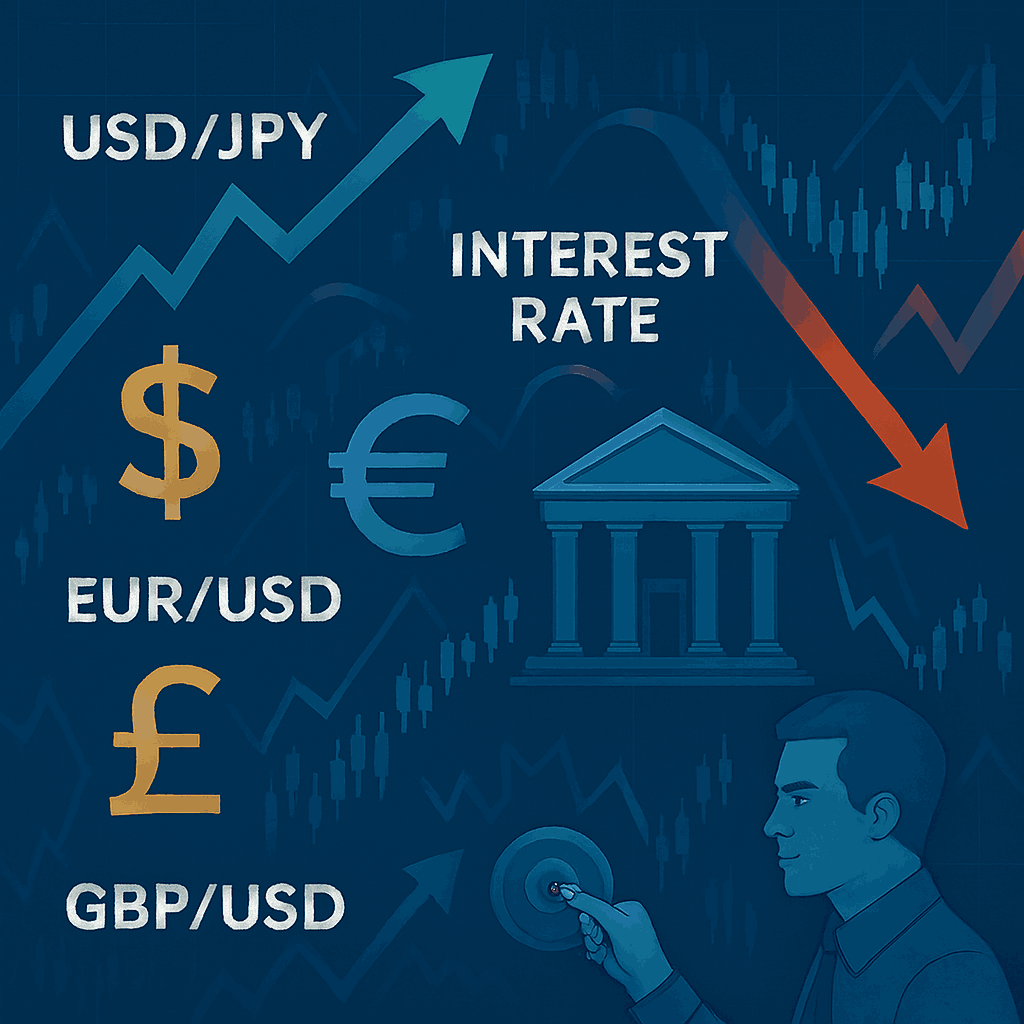
In currency markets, few forces are as consistently powerful as interest rates. They shape capital flows, influence risk appetite, and set the tone for long-duration trends. The role of interest rates in driving forex trends is especially clear in major pairs like GBP/USD, EUR/USD, and USD/JPY, where multi-month moves often hinge on the path of policy rates and, crucially, what markets expect those rates to be in the future.
Why rates move currencies
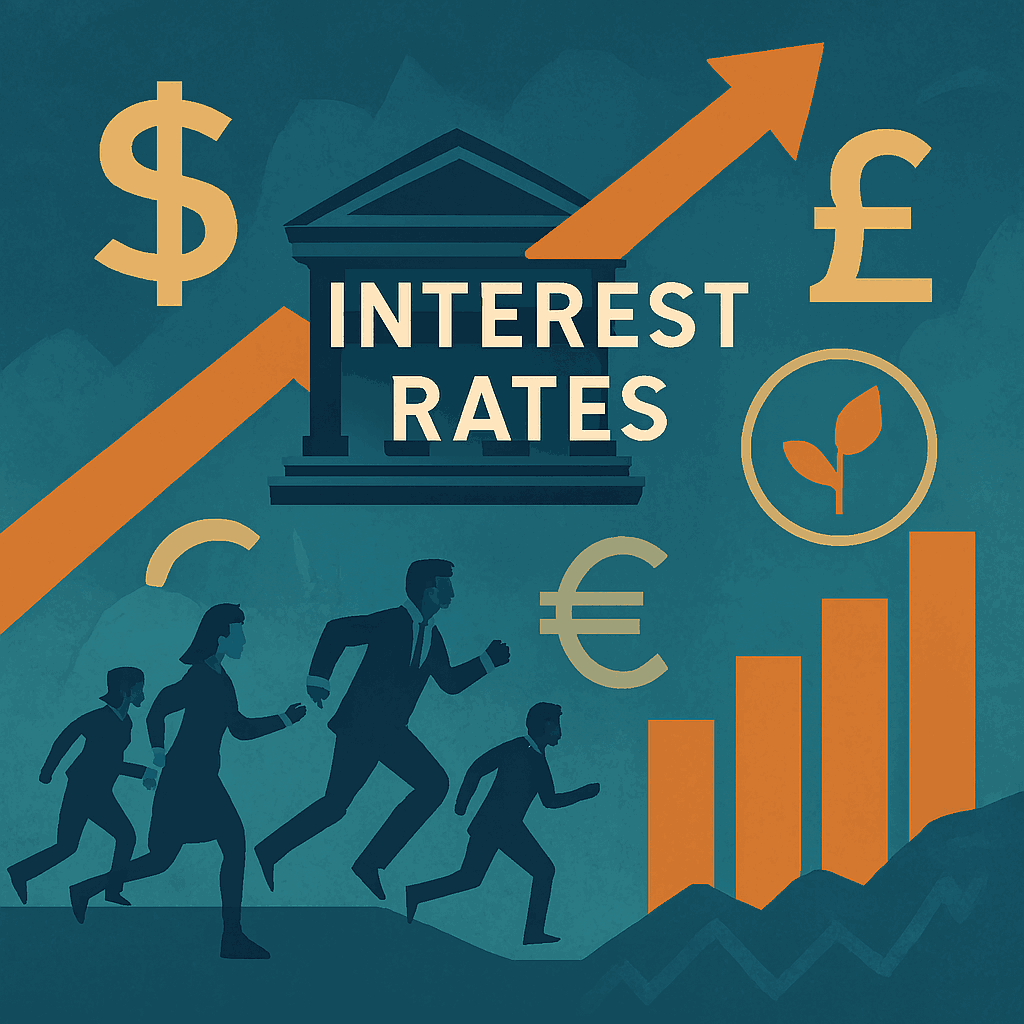
When a central bank raises rates, local yields rise and the currency typically appreciates as global investors seek higher returns. Cuts do the opposite, reducing foreign demand and often weakening the currency. The effect is magnified when policy shifts surprise consensus or when the move changes the perceived trajectory of the cycle.
Differentials and the yield curve
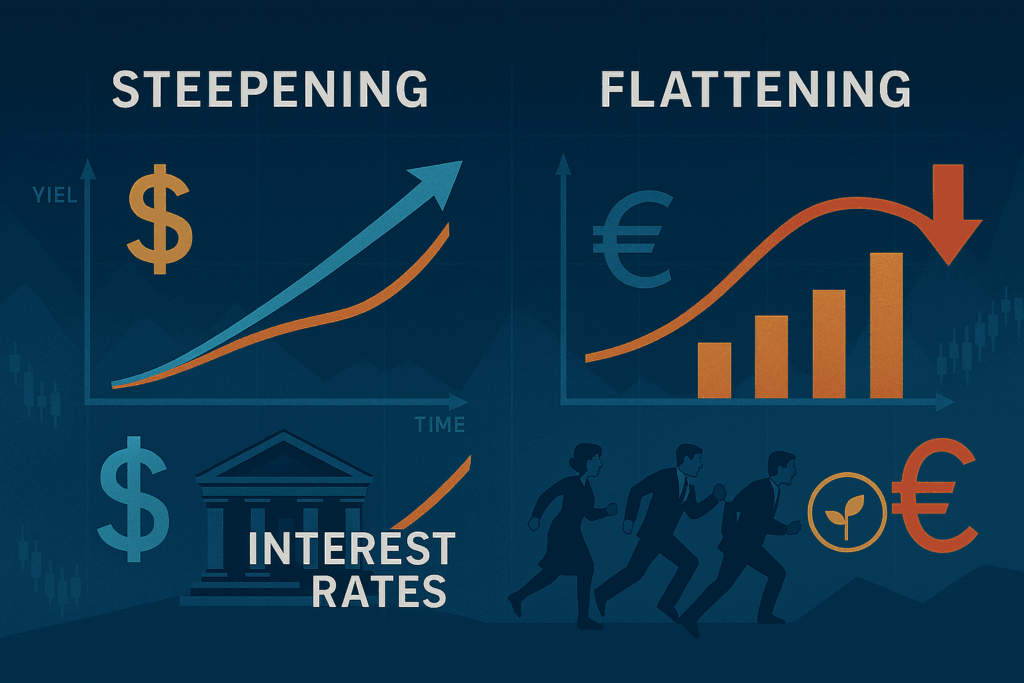
Forex is always relative. Traders focus on interest-rate differentials the gap between two economies’ short- or long-dated yields. A widening differential in favor of Country A tends to support its currency against Country B. Beyond front-end policy rates, the yield curve matters too. If markets price persistent inflation and tighter policy, longer-dated yields rise, attracting slow-moving capital and supporting the currency even without an immediate hike.
Expectations and forward guidance
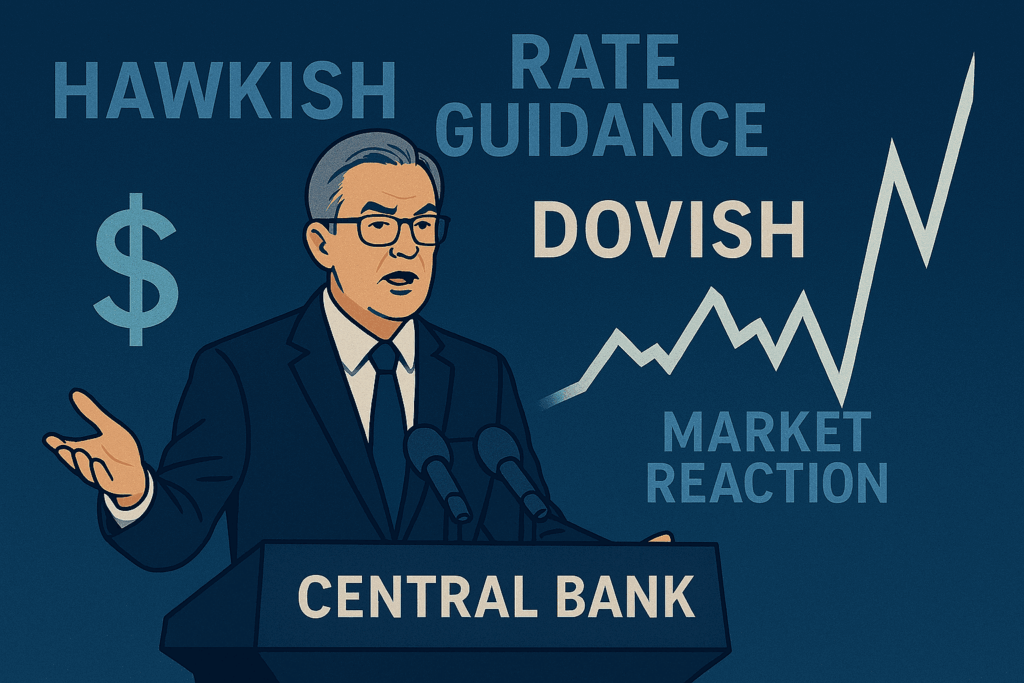
FX often moves on expectations, not outcomes. Central bank speeches, minutes, and projections (like dot plots or rate paths) anchor those expectations. A hawkish shift in guidance signaling readiness to tighten can lift a currency weeks before any action. Conversely, a subtle dovish tone can trigger depreciation despite an unchanged policy rate. Watching the evolution of guidance relative to market pricing is essential.
Carry trades and risk cycles
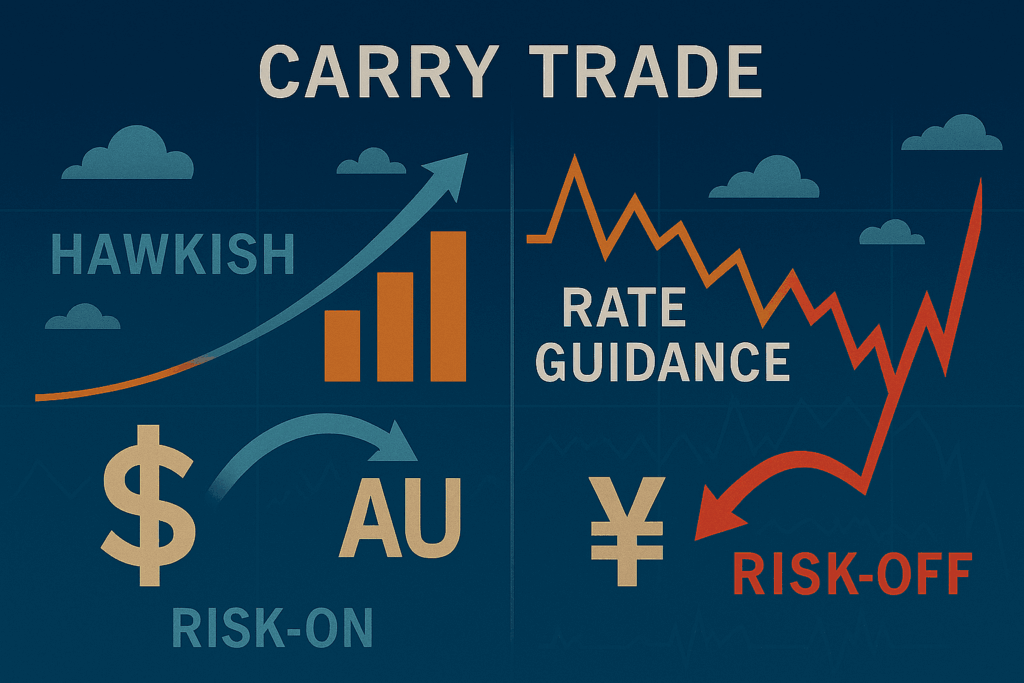
Higher rates invite carry trades: borrowing in a low-yielding currency to invest in a higher-yielding one. In calm, risk-on periods, carry strategies can steadily support high-yield currencies. But carry is fragile. A bout of risk aversion, a negative data shock, or tighter global financial conditions can force rapid unwinds, sending high-yielders lower and boosting safe-haven currencies like JPY or CHF even if their rate settings haven’t changed.
Data that drives rate expectations
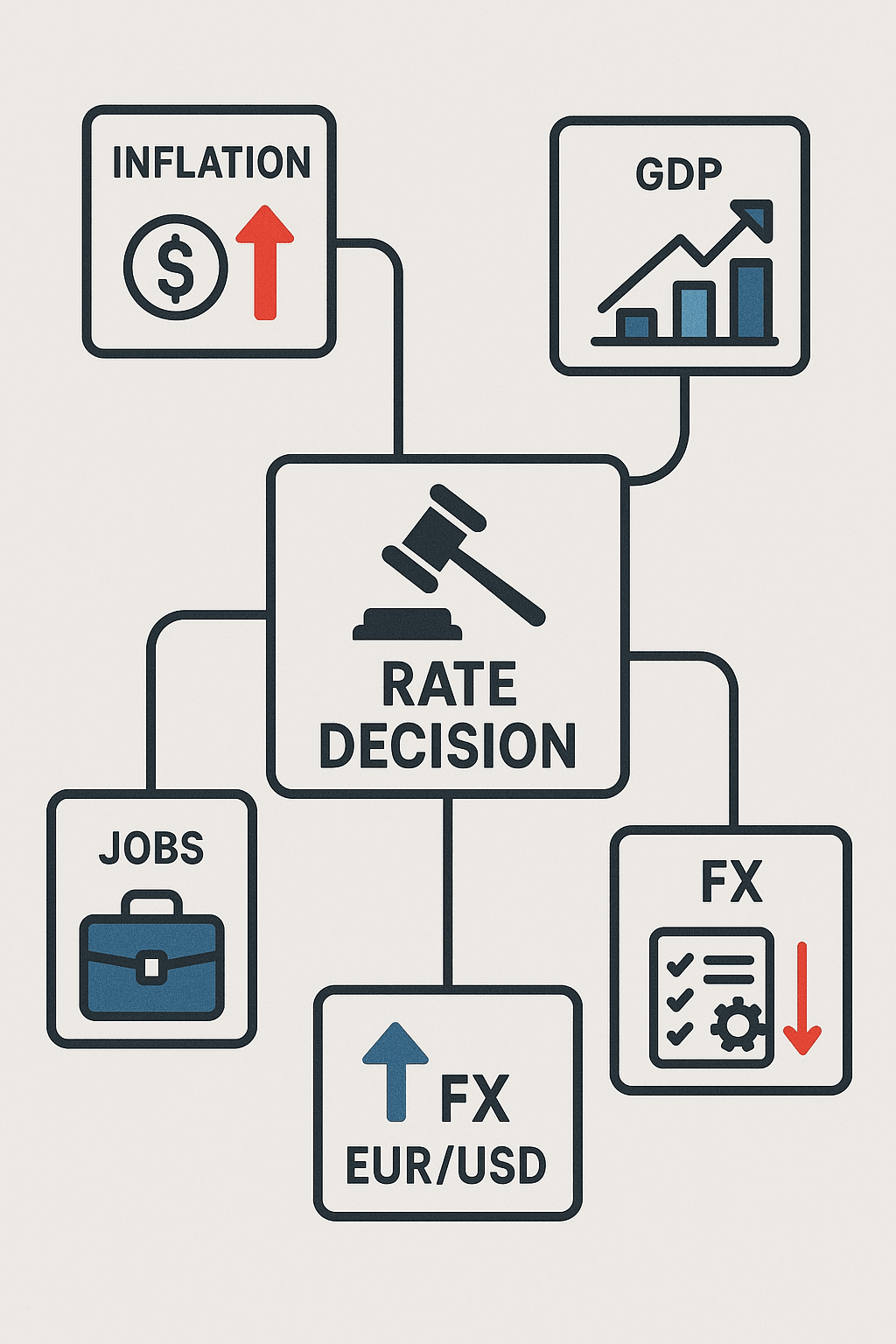
To anticipate rate paths, traders track:
- Inflation (headline and core) for persistence and breadth;
- Labor markets (employment, wages) for demand-driven pressure;
- Growth indicators (PMIs, GDP) for slack or overheating;
- Financial conditions (credit spreads, housing) for transmission.
These releases can reprice entire rate curves within minutes, pushing FX in the direction implied by the new expected differential.
A practical trading playbook
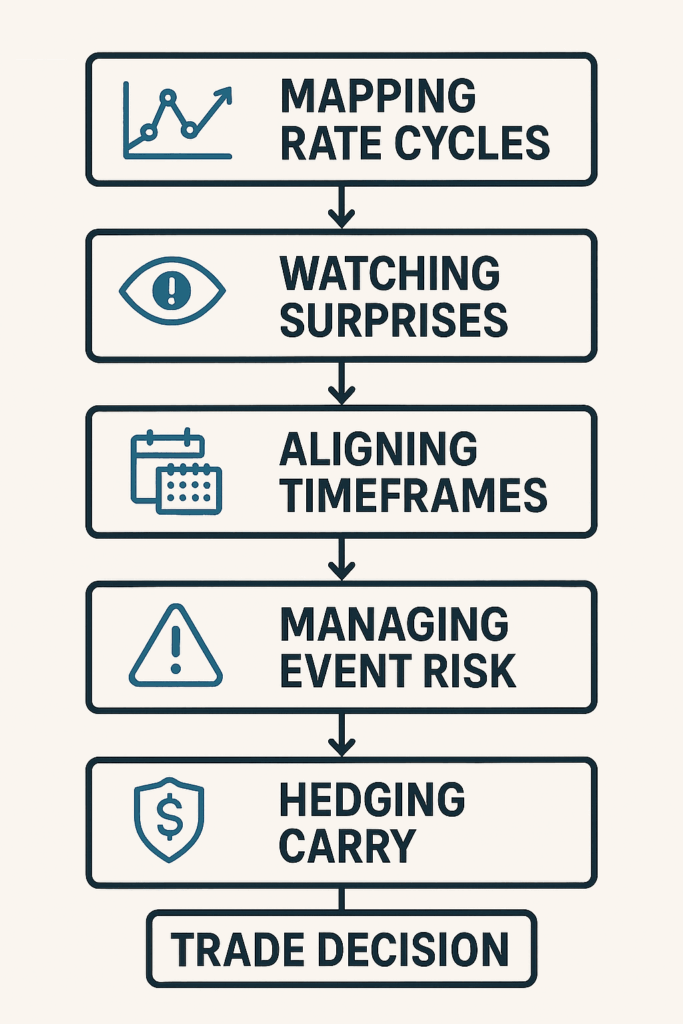
- Map the cycle: Is each central bank hiking, pausing, or cutting? Place the pair on a spectrum from hawkish to dovish.
- Watch surprises: Trade the deviation from expectations, not the headline; the “surprise” drives the move.
- Link timeframes: Use long-term differentials to define bias, then time entries with technical levels and intraday catalysts.
- Mind the calendar: Position light into major rate decisions; volatility around statements can be extreme.
- Hedge carry: If you hold positive-carry positions, consider options or smaller sizing through risk events.
Risks and cross-currents
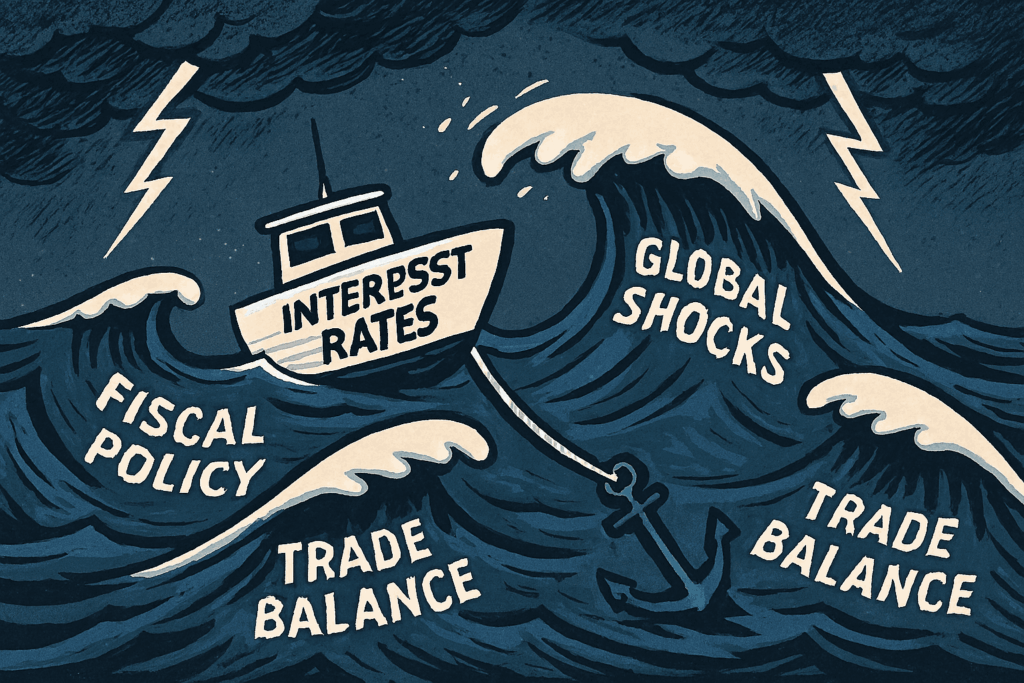
Rates don’t act alone. Terms of trade, fiscal policy, and global shocks can swamp rate effects in the short run. Safe-haven flows may strengthen USD or JPY even when their rate advantage is small. Structural stories like productivity or current-account positions can also offset pure rate logic. Treat interest rates as the anchor, not the whole boat.
Conclusion
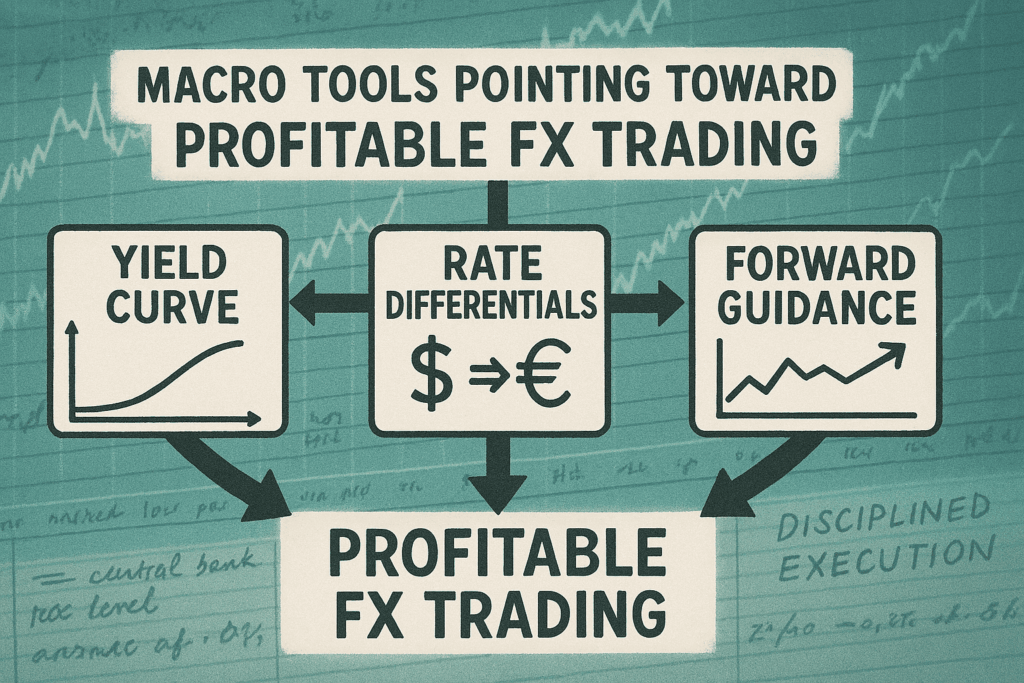
Interest rates are the engine of forex trends, but expectations are the fuel. By monitoring differentials, guidance, and the data that shifts them, traders can align with macro currents rather than swim against them. Combine that macro view with disciplined execution respecting key technical levels and risk management and interest-rate insight becomes a durable edge across market cycles.