In the world of forex trading, few forces are as powerful as central banks. These institutions don’t just manage monetary policy within their borders they influence global capital flows, investor sentiment, and ultimately, the value of their currencies. For traders, understanding how central banks shape currency valuations is critical to anticipating long-term currency movements and positioning effectively during high-volatility events.
Interest Rates as the Primary Driver
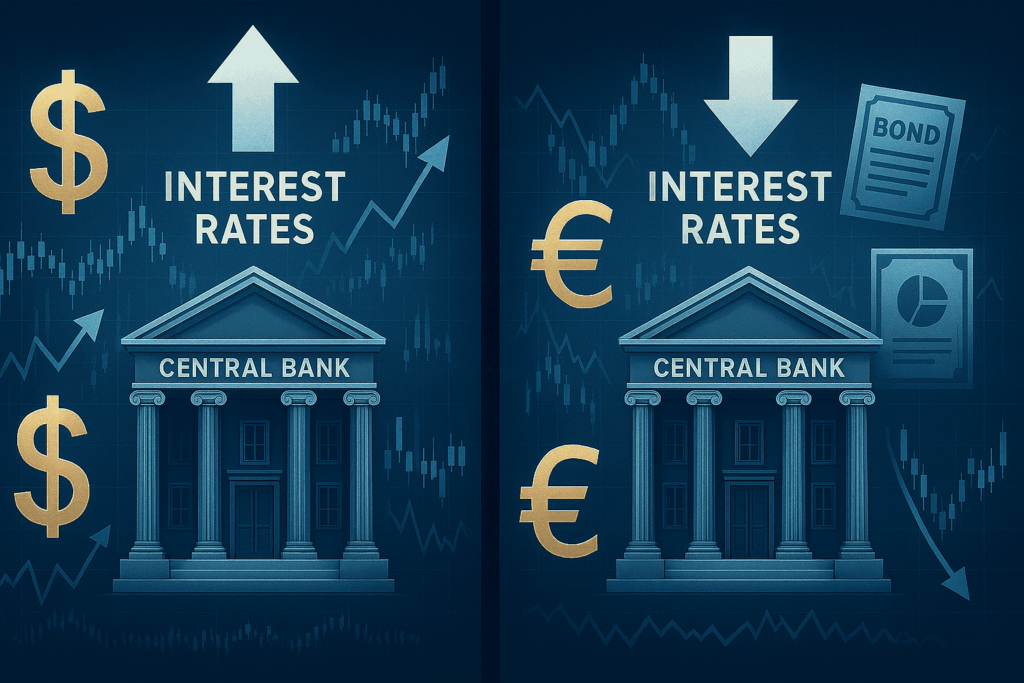
One of the most direct ways central banks shape currency valuations is through interest rate policies. Higher interest rates tend to strengthen a currency because they offer investors better returns on government bonds and deposits. For example, if the U.S. Federal Reserve hikes rates while the European Central Bank keeps them low, capital often flows into the dollar, pushing USD higher against the euro. Conversely, when rates are cut, currencies usually weaken, as investors seek better returns elsewhere.
For traders, interest rate differentials are one of the most important indicators to watch. A widening gap between two countries’ rates often creates strong and sustained forex trends, particularly in major pairs.
Quantitative Easing and Liquidity Measures
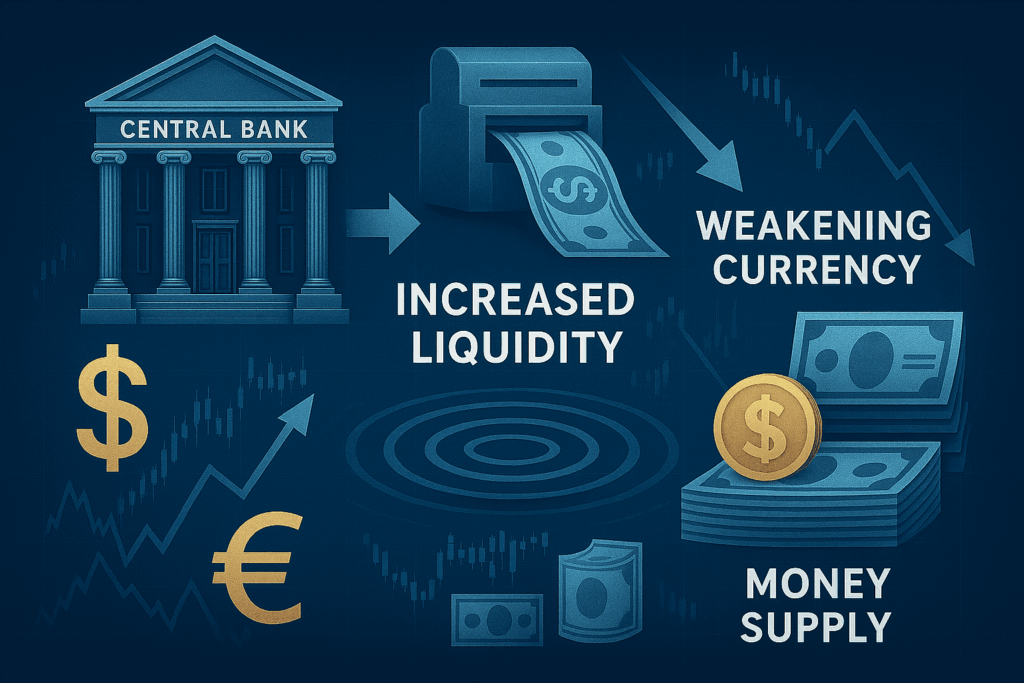
Beyond traditional rate adjustments, central banks also employ unconventional tools like quantitative easing (QE). QE involves large-scale asset purchases usually government bonds to inject liquidity into the economy. While this can stimulate growth, it often weakens the currency by expanding money supply and reducing yields.
For instance, the Bank of Japan’s long-standing QE program has been a major factor behind the yen’s prolonged weakness. Traders who understand these dynamics can anticipate prolonged trends in currency depreciation when aggressive easing is announced.
Market Interventions and Verbal Guidance
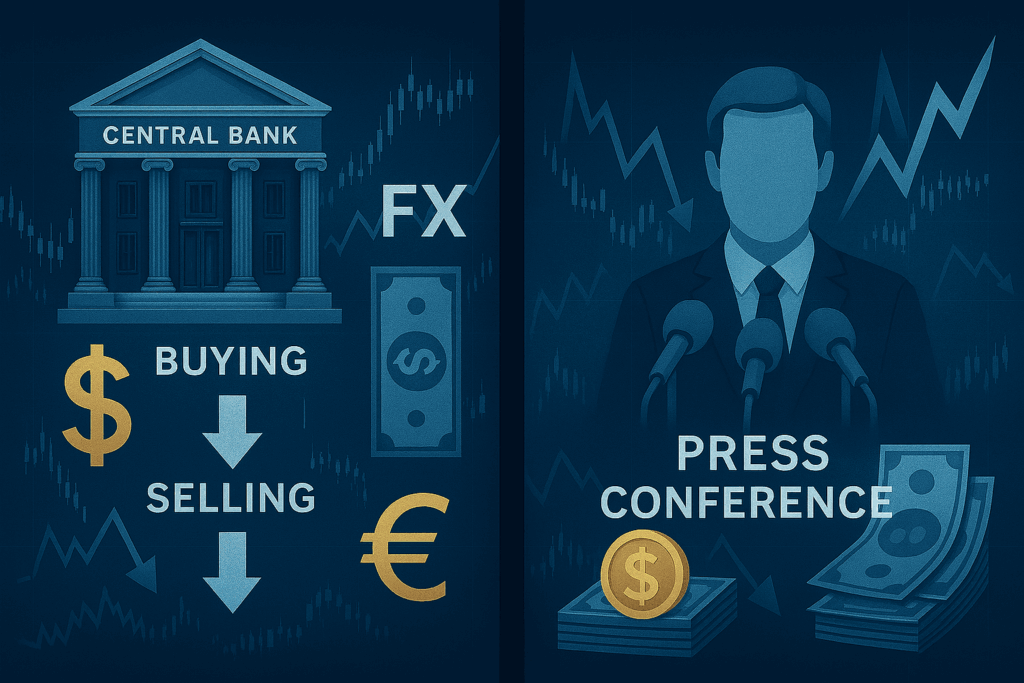
Sometimes, central banks take a more direct approach by intervening in the forex markets. This can involve outright buying or selling of their currency to influence exchange rates, particularly when sharp moves threaten economic stability. Switzerland’s central bank, for example, has a history of intervening to prevent excessive appreciation of the Swiss franc.
Equally impactful is forward guidance public statements or press conferences where central bankers hint at future policies. Markets react instantly to even subtle shifts in language. A phrase like “we are prepared to tighten policy further” can boost the currency immediately, even before any action is taken.
Inflation and Employment Mandates
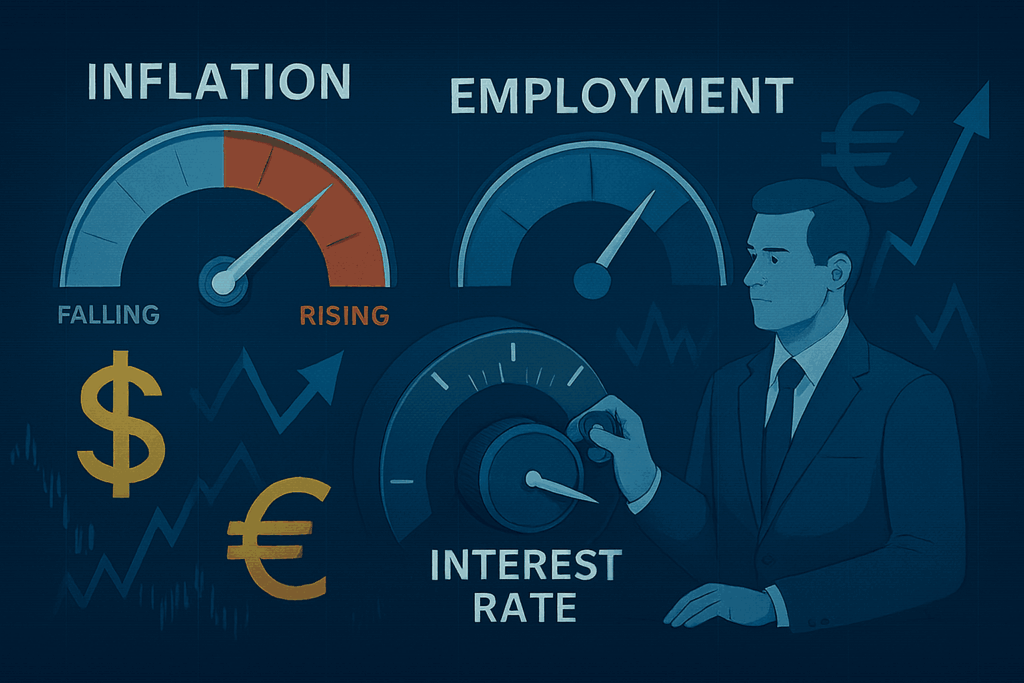
Central banks often operate under dual or multiple mandates typically targeting inflation and employment. When inflation runs hot, raising rates becomes a priority, which supports the currency. On the other hand, during recessions, banks may cut rates or expand stimulus, pressuring the currency. Traders who align their strategies with these broader economic goals often have an edge in predicting central bank actions and their currency effects.
Why This Matters for Forex Traders
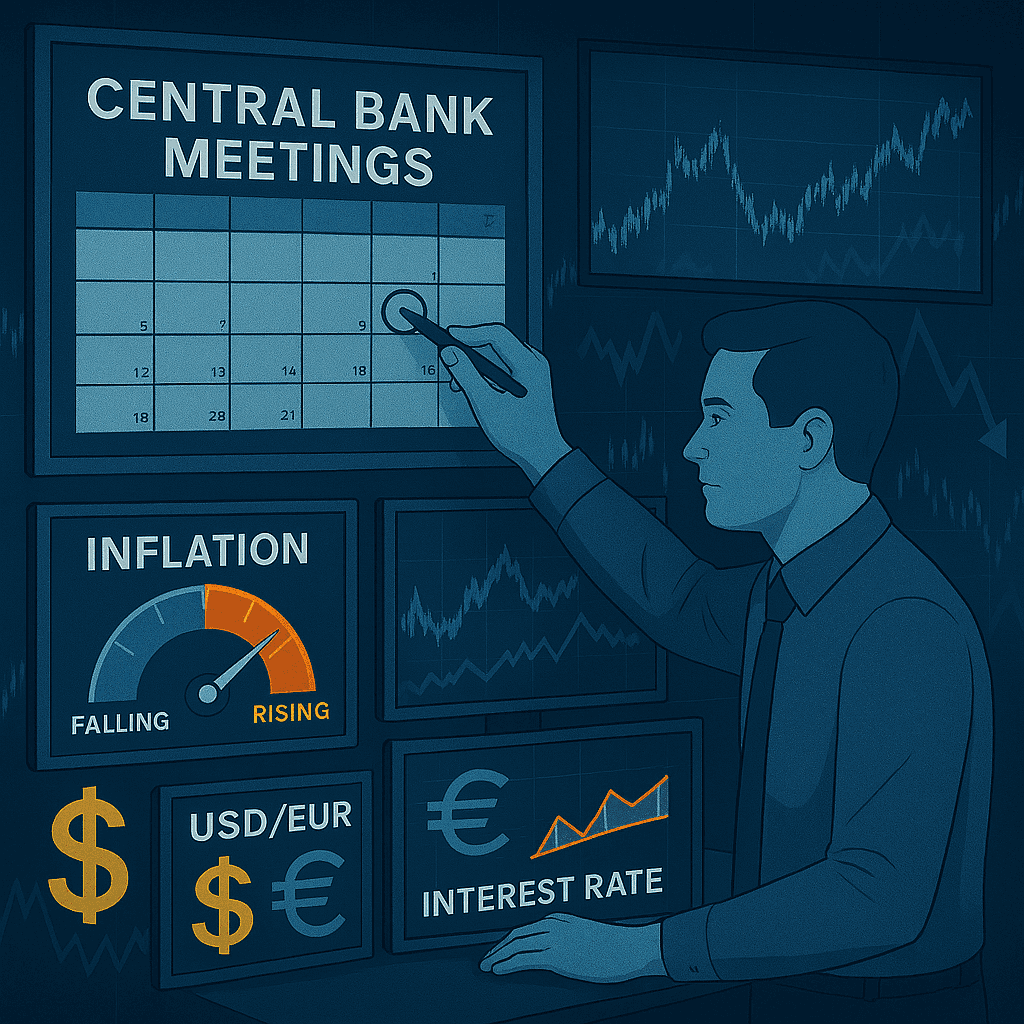
For active traders, central bank meetings, press releases, and speeches are among the most market-moving events on the calendar. Currency valuations can swing sharply in response, creating both risks and opportunities. Long-term investors may focus on broader monetary policy trends, while short-term traders often look to capitalize on immediate volatility around announcements.
By studying central bank behavior, understanding policy cycles, and staying updated with global monetary shifts, traders can better navigate the forex market and avoid being caught off guard by sudden policy-driven moves.