Introduction
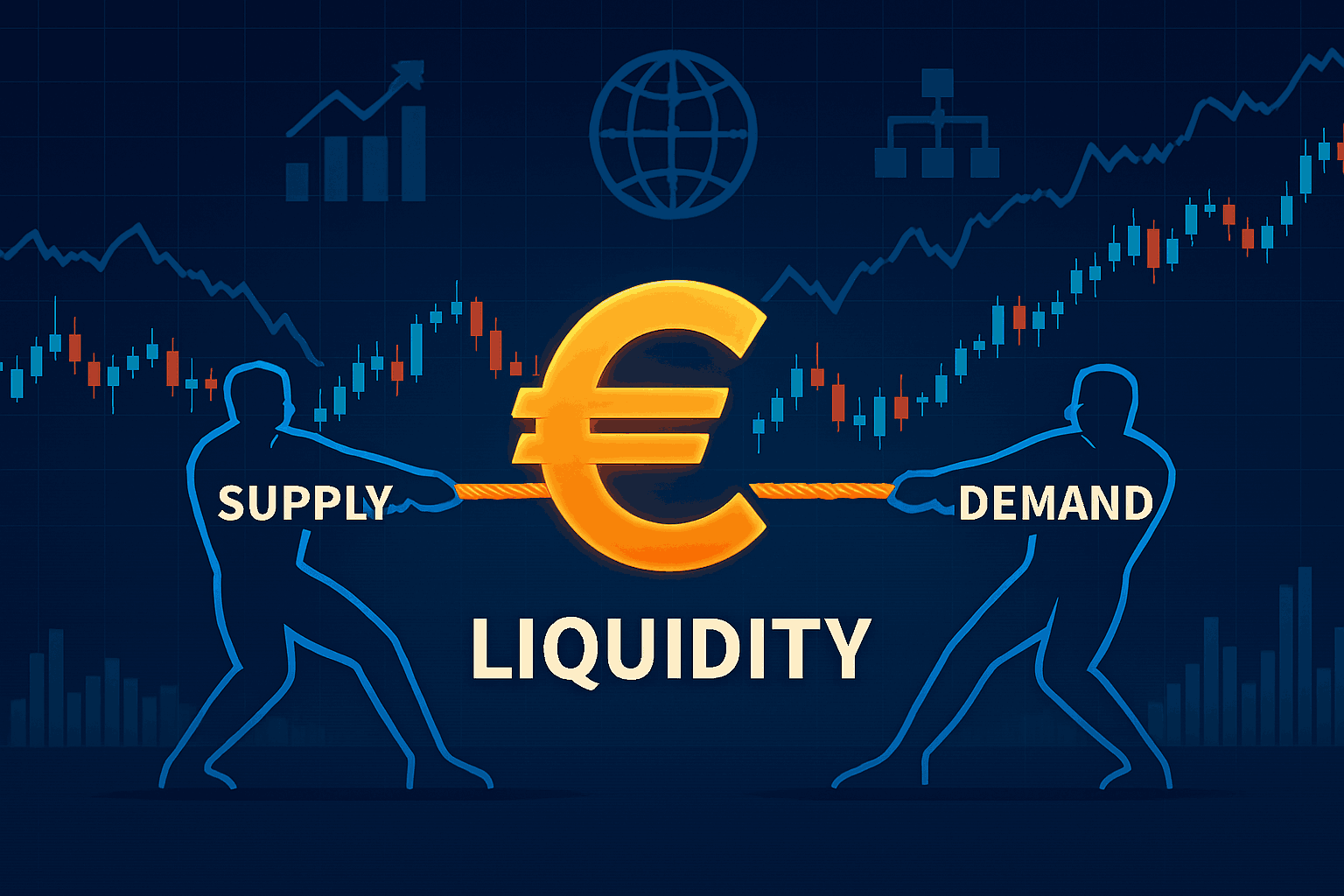
In the forex market, every price movement can be traced back to a single principle: supply and demand. These two forces determine the value of currencies in the same way they shape the price of goods in everyday markets. Yet, supply and demand in forex are driven by more complex factors, ranging from central bank actions to global investor sentiment. For traders, mastering this relationship is key to anticipating price shifts and identifying profitable opportunities.
The Mechanics of Supply in Forex
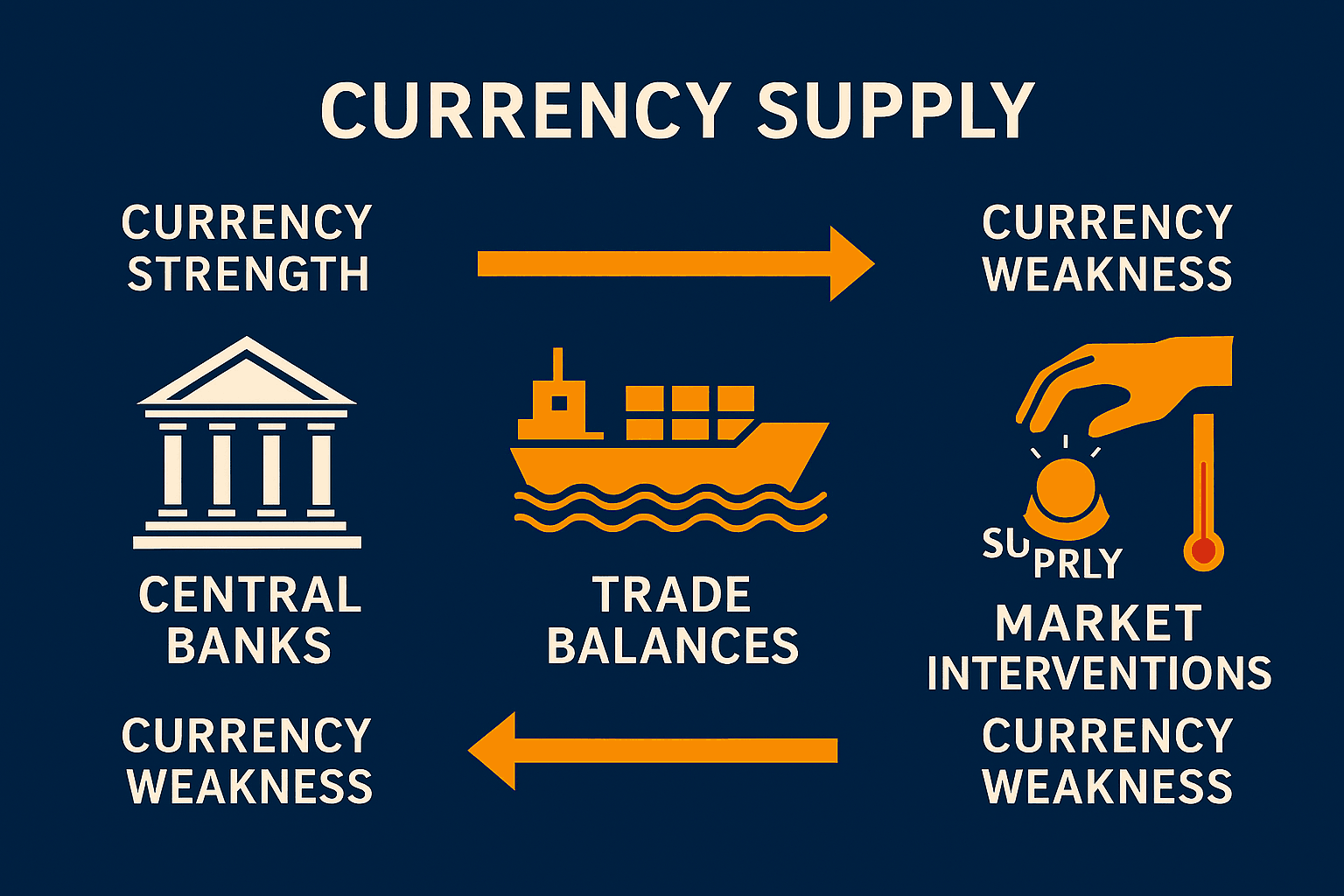
Supply refers to how much of a currency is available in the market. Unlike commodities or goods, currencies aren’t physically limited; they are controlled by monetary policy, economic conditions, and financial institutions.
- Central Banks – When a central bank prints money or engages in quantitative easing, it increases the currency’s supply, usually weakening its value. Conversely, raising interest rates tends to tighten supply, making the currency more scarce and valuable.
- Trade Balances – A country running a trade deficit often has excess supply of its own currency, as it pays for imports, putting downward pressure on its value.
- Market Interventions – At times, governments directly intervene in forex markets to adjust supply and stabilize exchange rates.
The Role of Demand in Currency Strength
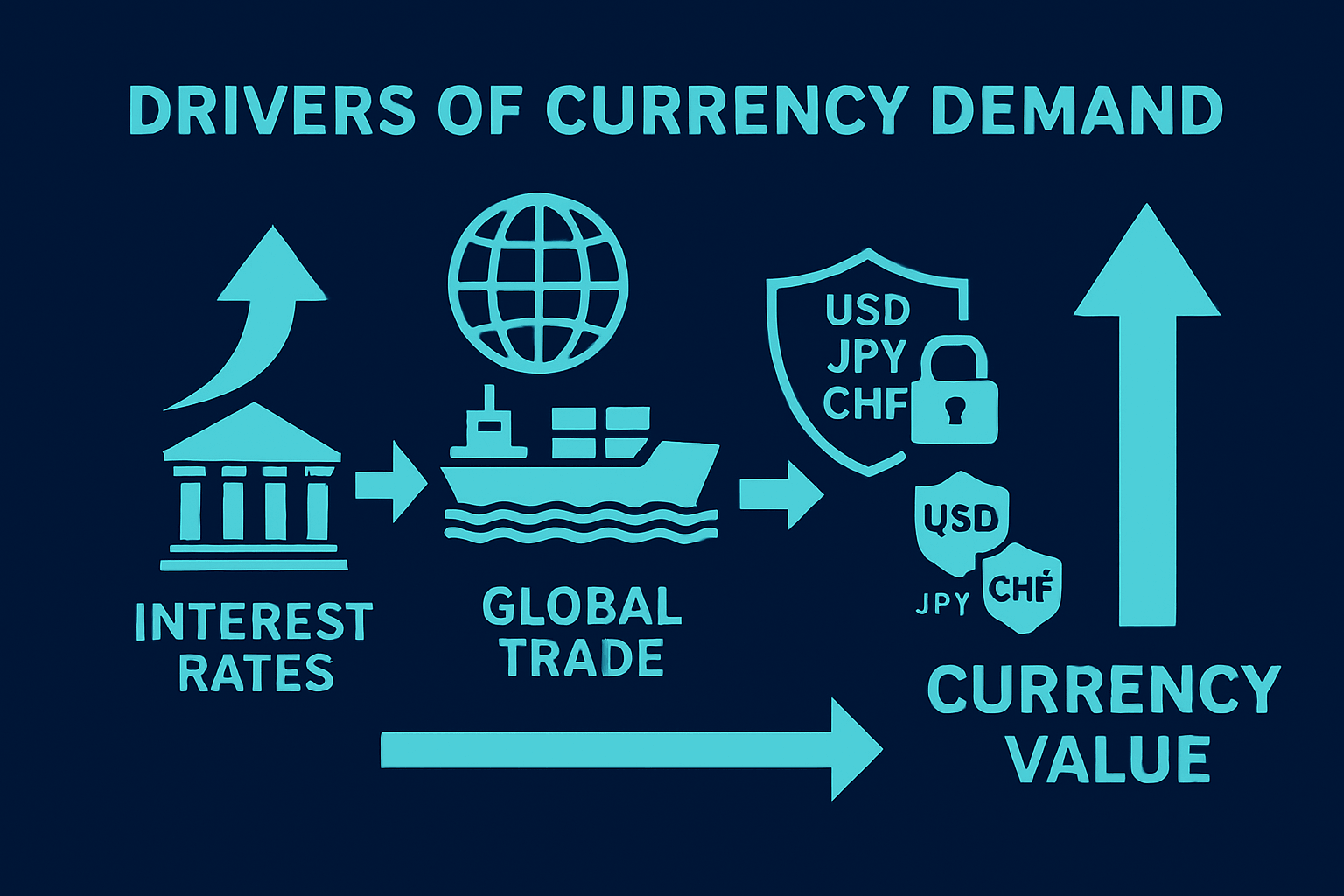
Demand represents how much investors, businesses, and governments want to hold or use a currency. Several factors drive demand:
- Interest Rate Differentials – Higher yields attract foreign capital. For example, if the UK offers higher rates than the Eurozone, demand for GBP rises as investors seek better returns.
- Global Trade & Investment – Strong exports or high levels of foreign direct investment create demand for a nation’s currency.
- Safe-Haven Flows – During crises, investors flock to “safe” currencies like USD, JPY, or CHF, increasing demand sharply and often unpredictably.
Supply-Demand Imbalances: The Real Movers
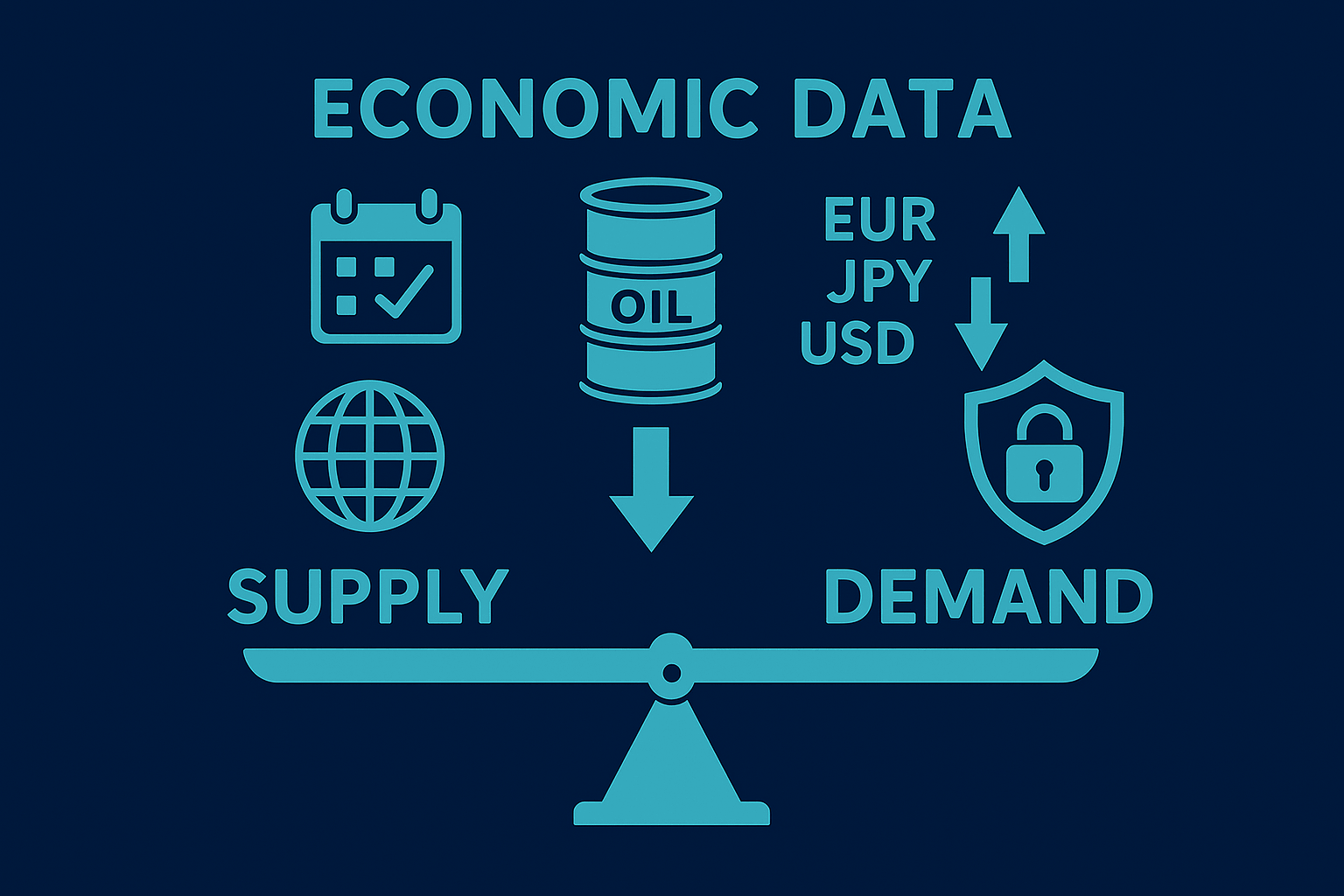
What truly moves forex markets are the imbalances between supply and demand. If demand outpaces supply, the currency appreciates. If supply grows faster than demand, depreciation occurs.
For example:
- A strong jobs report in the US can increase demand for USD as investors anticipate Fed tightening.
- A surge in oil prices can boost demand for oil-exporting currencies like CAD, while raising supply pressures on import-heavy currencies.
These imbalances often manifest as sharp moves during economic data releases, central bank meetings, or geopolitical shocks, which traders must watch closely.
Practical Application for Traders
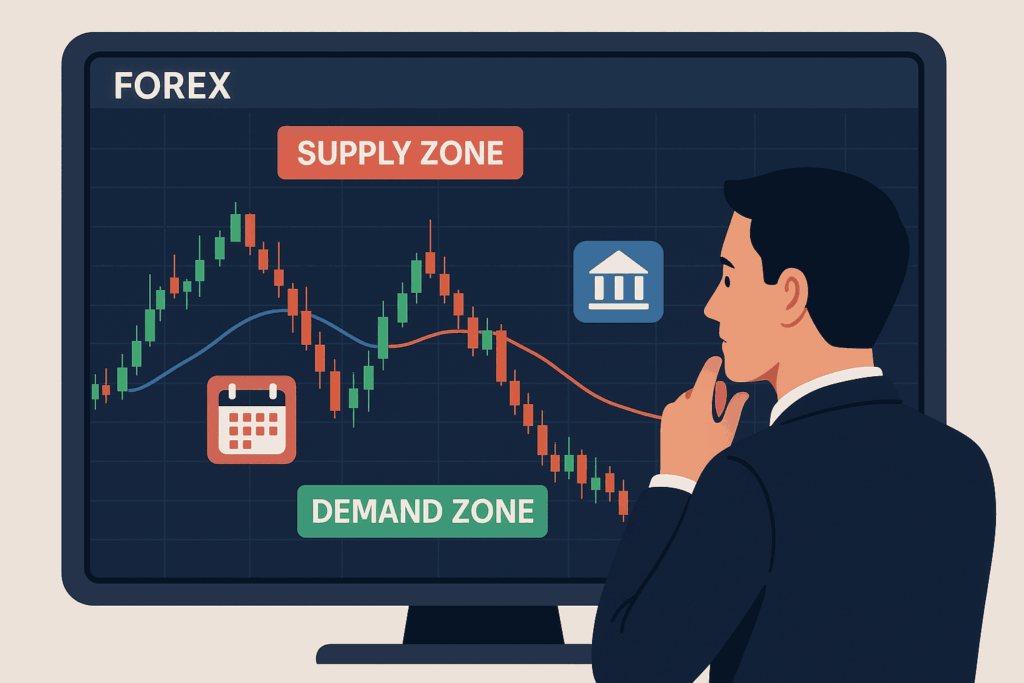
Understanding supply and demand is not just theory , it can be applied in real trading strategies:
- Identify Supply and Demand Zones – On charts, these appear as support and resistance levels where price historically reversed due to strong buying or selling pressure.
- Monitor Economic Calendars – News releases such as GDP, inflation, or central bank rate decisions often shift supply-demand dynamics instantly.
- Combine with Technical Analysis – Use candlestick patterns, moving averages, or volume indicators alongside supply-demand insights for higher confidence in entries.
- Follow Central Bank Speeches – Even subtle hints about monetary policy can drastically affect supply expectations and trigger demand shifts.
Conclusion
Supply and demand remain the foundation of forex price movements. Unlike other markets, these forces in forex are influenced not only by traditional economic activity but also by central bank decisions, geopolitical risks, and global investor sentiment. For traders, the key lies in spotting where supply-demand imbalances will occur next , whether on an economic calendar, in a central bank statement, or at a key technical level. Mastering this principle equips traders with the foresight to anticipate market moves and align their strategies with the underlying forces that truly drive currency prices.